This Children’s Day, an unlikely lineup - an Olympic badminton champion, two Bollywood actors, a MasterChef winner and a string of doctors - came together for a single cause: making sure India’s children aren’t just eating, but actually getting nourished.
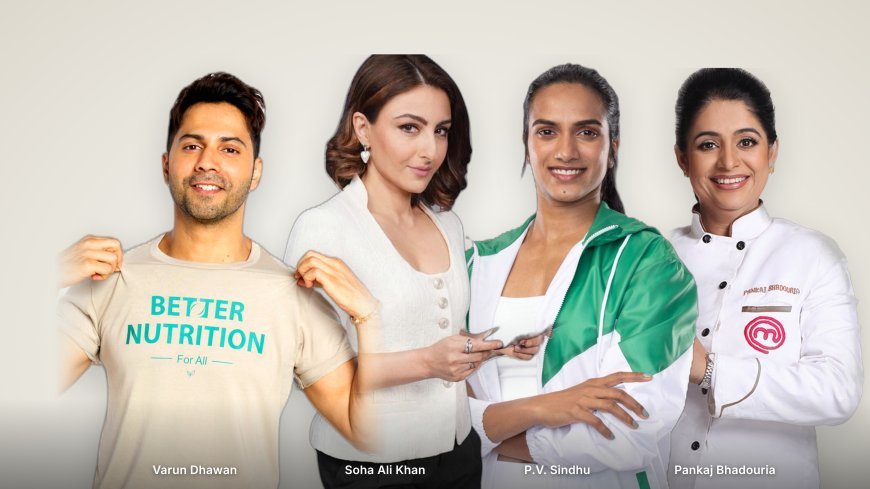
The campaign, called “Let’s Feed Our Kids Better,” is the work of Better Nutrition, a brand built around biofortified staples. On Friday, the company rolled out a coordinated push featuring P.V. Sindhu, Varun Dhawan, Soha Ali Khan, chef Pankaj Bhadouria, actors Isha Koppikar and Kunal Jaisingh, four doctors, parenting creator Timsy Jain, home chef Ganesh Shedge, and more than 20 parent-creators who carried the message to their own audiences.
Explaining nutrition to kids, from kids
Sindhu and Dhawan each spent time with groups of children, breaking down what biofortification actually means in language a child could follow. Dhawan also spoke about why, as a parent, he believes the first 1,000 days of a child’s life matter more than any other stretch.
Khan, who recently introduced biofortified wheat farming on the Pataudi family’s land, framed the issue as one that starts well before the kitchen - in the soil itself. Bhadouria, who advises Better Nutrition on culinary matters, demonstrated how ordinary Indian meals can be made more nutritious without altering a single recipe.

The numbers behind the push
The campaign is built on some sobering data. The National Family Health Survey (NFHS-5) found that two out of every three Indian children between six months and five years old are anemic. A separate study, the Comprehensive National Nutrition Survey, found that nearly a third of adolescents are deficient in zinc - a mineral critical to growth, brain development and immunity.
What makes these numbers striking is that the deficiencies often show up in children who are eating regularly. The problem isn’t the absence of food - it’s what’s missing from it.
Breeding nutrition into the crop itself
Better Nutrition’s approach leans on biofortification: using conventional plant breeding - not genetic modification - to develop wheat and rice varieties that naturally contain higher levels of iron and zinc. Since atta and rice are staples eaten at nearly every meal in most Indian households, even a modest nutritional boost in these grains can meaningfully shift a child’s daily intake, without requiring any change in diet or cooking habits.
What they said
Dhawan recalled the children’s curiosity fondly, noting that parents often fixate on whether their kids have eaten enough, rather than what’s actually in that food. He called the idea of nutrient-enriched roti and rice “such a simple way to give them a better start.”
Khan described bringing biofortified wheat to the Pataudi farms as a natural extension of her family’s long relationship with agriculture, adding that she values nutrition being built into the grain itself rather than added afterward.
Sindhu, reflecting on her own experience as an athlete who regularly monitors her iron levels, pointed out that most children never get that kind of check - and said she found the conversations with kids genuinely engaging.
Prateek Rastogi, the company’s founder and CEO, said that when Better Nutrition launched, few people saw why the iron content of atta mattered. Now, he noted, an Olympian, actors, a chef and doctors are all raising the same issue on the same day - underscoring his belief that hidden hunger, even among well-fed children, is best solved through food rather than medication.
From farm to shelf
Better Nutrition operates as the consumer-facing arm of Lucknow-based Greenday Farmer Solutions. Greenday supplies biofortified seeds to a network of more than 24,000 farmers, who in turn earn premium prices for their nutrient-dense harvests. Better Nutrition buys back these crops and processes them into atta, rice, dals and millets, each batch tested for iron and zinc content before reaching consumers.