New Delhi [India], July 25: While many early-stage technology companies begin their journeys through accelerators and pre-seed funding programmes, Karooli AI is taking a markedly different route. The Indian artificial intelligence startup says it has spent the past few months building its technology, products and distribution engine before approaching external investors.
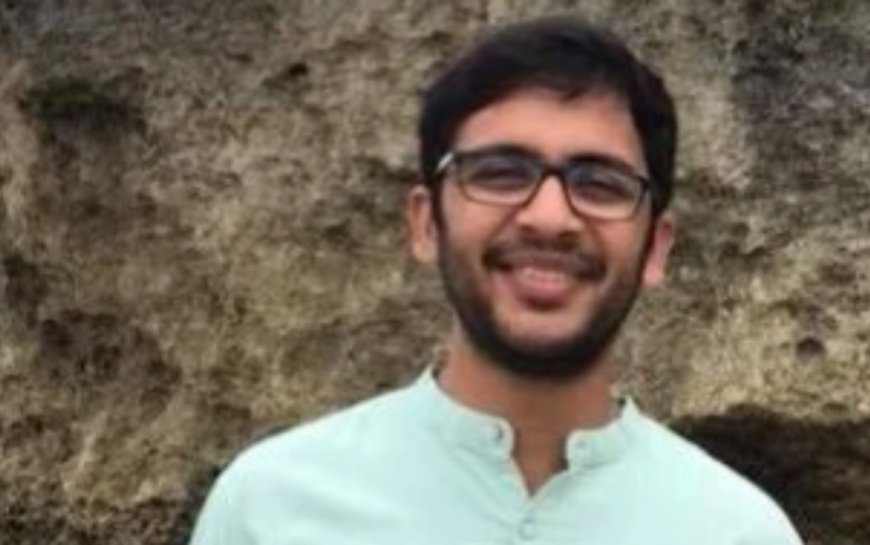
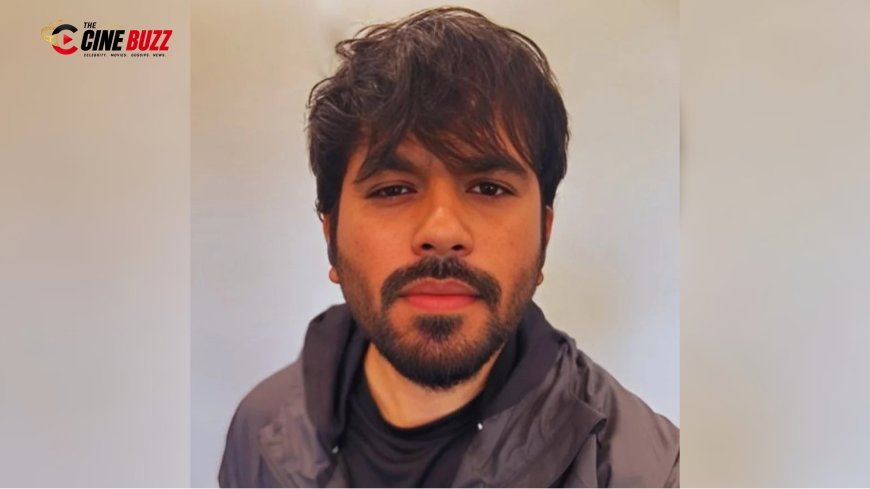
In a LinkedIn post outlining the company’s progress, Karooli AI CEO and Founder Vaibhav Singh revealed that the startup has developed a proprietary AI model, quietly launched its first consumer product in Western markets and completed testing of a second product that is expected to enter beta soon.
Singh’s relationship with technology began at an unusually young age. He started teaching himself to code when he was around 12 or 13, learning from every programming book he could get his hands on. He later built a career in Product design, but eventually walked away from a highly paid role to pursue his entrepreneurial ambitions and build Karooli AI.
The company’s approach reflects an emerging shift among some AI founders: proving product demand and establishing distribution before raising institutional capital.
“People raise pre-seed rounds from places like a16z Speedrun, South Park Commons and Y Combinator to build their product. But we wanted to do it differently,” Singh wrote.
Building in stealth
Karooli AI has largely operated in stealth, sharing limited information about its products or the underlying technology. According to Singh, its core model has been designed to understand human emotions and interactions more effectively than conventional AI systems.
The startup claims that the model outperforms certain legacy models from OpenAI and Anthropic on emotional intelligence benchmarks. The model and its benchmark results have not yet been released publicly, meaning the claims could not be independently verified.
Karooli AI plans to formally unveil the model in the coming weeks.
Emotional intelligence is becoming an increasingly important area of AI development, particularly for consumer applications involving companionship, mental wellness, coaching, education and personalised communication. While large language models have made rapid progress in reasoning and content generation, their ability to understand emotional context consistently remains an open challenge.
Karooli AI appears to be positioning its technology around this gap.
https://www.linkedin.com/posts/v-s-thakur_karooli-technology-for-what-makes-us-human-activity-7485650700253745153-1DsI
First product finds users outside India
The startup said it has already designed, built and quietly released its first product in Western markets. Although the company has not disclosed the product’s name, user numbers or revenue, it says people from multiple countries are now using the platform daily.
Rather than relying primarily on paid acquisition, Karooli AI has been assembling its own distribution network. The company has onboarded more than 50 creators from the United States who are aligned with its mission and are helping it reach its intended audience.
It has also created and operates several social media accounts in-house. Content published across these accounts has generated more than one million combined views, according to the company.
The emphasis on distribution is noteworthy at a time when the falling cost of software development has made it easier to launch AI products – but significantly harder for individual products to stand out.
For Singh and his team, the content operation is not being treated merely as a marketing function added after product development. It appears to be a central part of the company’s strategy from the outset.
“Distribution is king,” Singh wrote.
A multidisciplinary team
Under Singh’s leadership, Karooli AI has assembled a team extending beyond engineers and AI researchers. It includes developers from the Indian Institutes of Technology, award-winning film directors, editors, advertising specialists and professionals experienced in building digital acquisition funnels.
That combination suggests the company intends to compete through storytelling, brand and creative execution alongside its underlying technology.
The startup said it has produced a collection of advertisements ahead of its broader launch, with the creative work designed to establish an emotional connection with audiences. It is preparing what it describes as an unconventional India launch for its first product.
The company has also been accepted into NVIDIA Inception, the chipmaker’s programme for startups working in artificial intelligence and other advanced technologies. The programme offers eligible companies access to technical resources, investor networks and preferential pricing on certain NVIDIA products and services.
Meanwhile, Karooli AI’s second product has completed internal testing and is expected to be released in beta in the near future. The company has not yet disclosed whether the two products will target the same customer segment or operate as independent offerings powered by its underlying model.
Choosing traction over fundraising
Karooli AI’s decision to build before raising capital runs counter to the conventional venture-backed startup playbook, particularly in the capital-intensive AI sector.
Developing proprietary models can require considerable expenditure on computing infrastructure, data, engineering talent and testing. Early funding often allows AI startups to absorb these costs while searching for product-market fit.
Karooli AI, however, appears to have prioritised operational control and early market evidence. By developing two products, cultivating an international user base and creating a repeatable content operation before fundraising, Singh may be aiming to enter future investor conversations with stronger leverage.
The strategy is not without risk. Delaying external funding can limit the speed at which a startup scales its infrastructure and team, particularly when competing against well-funded global companies. Claims about model performance will also face close scrutiny once the technology and its evaluation methodology become public.
Still, the approach could help Karooli AI demonstrate that it has solved one of the most persistent problems confronting consumer AI companies: acquiring and retaining users in a crowded market.
The company’s focus on handcrafted creative work is also a deliberate response to what Singh sees as increasingly generic branding across the AI startup ecosystem. He said he personally designed Karooli AI’s website, while the company’s content and forthcoming advertising campaigns have been developed internally. The startup is positioning artistic sensibility as part of its competitive advantage.
“Some people will love it, and some might not. That’s fine,” Singh wrote. “The point is, we did all this before raising a dime from investors.”
Whether that decision ultimately gives Karooli AI a durable advantage will depend on the performance of its model, the retention of its early users and its ability to convert attention into a scalable business.
For now, Vaibhav Singh and Karooli AI have chosen an unusual opening move: build the technology, find the audience and establish the brand – then consider the capital.
If you object to the content of this press release, please notify us at pr.error.rectification@gmail.com. We will respond and rectify the situation within 24 hours.