Mumbai, Maharashtra: For generations, spirituality in India has been deeply rooted in
routine, early morning temple visits, festival-led rituals, and family-driven traditions.
Today, however, a noticeable shift is underway. Across urban India, devotion is becoming
more flexible, personalised, and seamlessly integrated into everyday life.
This shift is being driven by demanding schedules, long commutes, and the rise of nuclear
households. People have begun scheduling their spiritual activities beforehand, booking
online, and participating even virtually. Thus, spirituality is becoming more flexible and
less associated with the traditional way of performing rituals, places, and time slots.
At the centre of this shift are platforms like SwaDharma (formerly 3ioNetra). While other
marketplaces focus on facilitating transactions between buyers and sellers, SwaDharma
focuses only on providing digital infrastructure for temples. This enables temples to
manage all of their activities independently without intermediaries.
SwaDharma is based on the “SwaDharma Stack”, a unified digital infrastructure designed
to enable temples to manage their operations, compliance, and devotees' engagement all
through one platform. By integrating payments, donations, identity and interactions,
SwaDharma attempts to organize a fragmented process and make everything more
efficient.
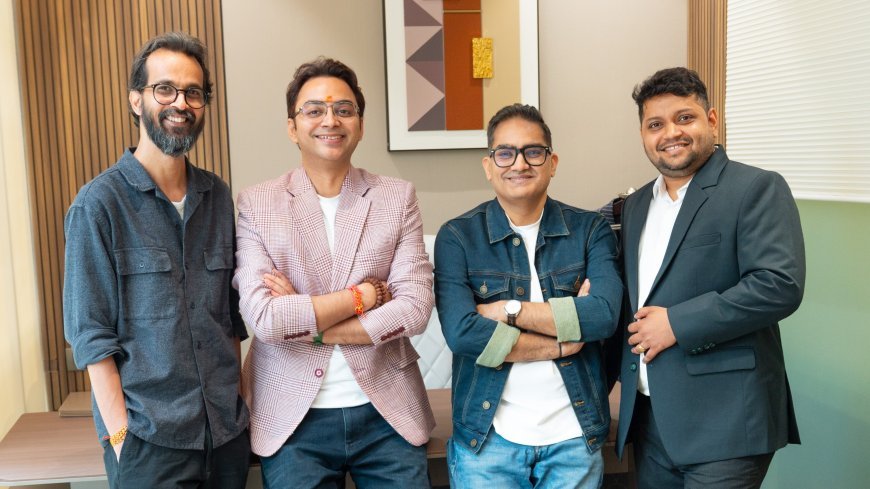
Amit Bhardwaj, Co-founder and CEO, SwaDharma, said, “India’s faith ecosystem has
always had scale and continuity, but its digital layer has been fragmented. Dharma Stack
is designed to bring structure, transparency, and operational efficiency to temples, while
ensuring that authenticity is preserved.”
Through its integrated platform, SwaDharma enables online pooja bookings, structured
access to rituals, and seamless donation systems, while also supporting temples with
backend operations such as payments, compliance, and devotee management. This
approach addresses long-standing challenges within temple ecosystems, including
fragmented systems, limited accessibility, and reliance on intermediaries.
Sharad Kamath, Chief Product Officer at SwaDharma, is leading the development of
technology solutions tailored for temple ecosystems, focusing on building systems that
align with their operational and cultural requirements.
Pratyush Ambuj, Co-founder and COO, SwaDharma, said, “Temples today operate on
disconnected systems, which impacts both trust and efficiency. Our managed marketing
model ensures that temples own their digital presence, eliminate intermediaries, and
build direct relationships with devotees at scale.”
Amit Kumar, Chief Business Officer at SwaDharma, is focused on enabling temples to
adopt a managed marketing model where they can directly establish relationships with
devotees and offer trusted services. He is also working on identifying temples with strong
Vedic importance that remain under-visited, with the aim of bringing their stories to
devotees and enabling deeper spiritual connection.
There have been promising initial successes in the form of over 100 temples registered,
reaching over 10 lakh worshippers, with financial transactions worth ₹100 crores being
processed. There is increasing interest amongst individuals to participate in their religious
activities that can be organized more efficiently.
In a changing environment, there are no disruptions but rather an adjustment to changes.
The rituals remain unchanged, but how they are accessed by people, on the other hand,
has seen tremendous change, thereby bringing spirituality to daily life in a seamless
manner.